Lars Schwarz · 7 October 2026
Analyzing Cargo Diversification Trends Among Secondary Port Locations Worldwide
Secondary ports around the world continue to expand their cargo profiles as global trade patterns evolve and primary hubs face capacity constraints. Researchers tracking maritime logistics note that facilities once focused on single commodity streams now handle mixtures of containers, bulk agricultural goods, energy equipment, and specialized project cargo. Data compiled through October 2026 shows measurable increases in non-traditional cargo volumes at these locations, driven by infrastructure upgrades and revised shipping routes that bypass congested mega-ports.
Defining Secondary Ports and Their Expanding Roles
Observers define secondary ports as those ranking below the top twenty global terminals by annual throughput yet serving critical regional functions. These sites often sit along secondary coastlines or river systems where landside connections reach inland manufacturing zones. Recent figures indicate that cargo diversification at such ports has accelerated since 2023, with containerized volumes rising alongside traditional breakbulk and liquid energy shipments. Ports in Southeast Asia and the Baltic region illustrate this shift, moving from coal or grain dominance toward mixed loads that include electric vehicle components and wind turbine parts.
Key Drivers Behind Diversification Patterns
Supply chain resilience initiatives have pushed shippers to test alternative gateways, and secondary ports have responded by investing in deeper drafts, larger cranes, and digital tracking systems. Trade data released in early 2026 reveal that rerouting around primary chokepoints increased calls at mid-sized facilities by measurable margins. Energy transition projects add another layer, as ports now receive nacelles, blades, and battery modules that require specialized handling previously reserved for larger terminals. Agricultural exporters in South America and Africa have likewise turned to secondary outlets when primary facilities experience delays, creating steady streams of reefer containers alongside conventional dry bulk.
Regional Examples of Cargo Shifts
In the Mediterranean, ports along the North African coast have broadened their offerings to include both automotive parts and refined petroleum products, supported by new roll-on facilities. Baltic secondary ports report growth in forest products combined with containerized consumer goods destined for Central European markets. Along the Gulf of Mexico, facilities in Mexico and the southern United States have added capacity for liquefied natural gas modules while maintaining steel and grain flows. Australian secondary ports on the eastern seaboard show similar patterns, integrating mineral sands with growing volumes of Asian manufactured goods. Each case demonstrates how local infrastructure investments align with broader trade realignments tracked through 2026.
Data Trends Observed Through Late 2026
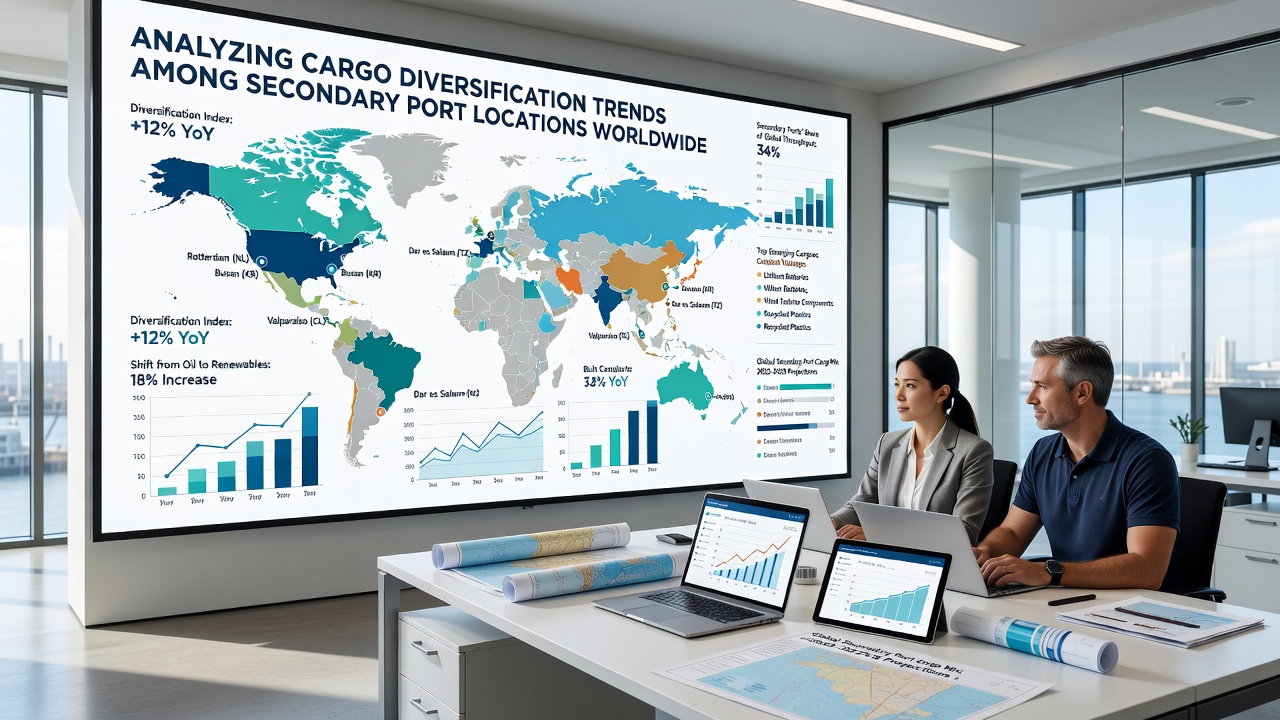
Statistics compiled by international maritime agencies indicate that secondary ports captured roughly fifteen percent more container moves in the first nine months of 2026 compared with the prior year. Bulk cargo diversification appears in parallel statistics, where ports once limited to one or two commodity types now list five or more active categories. UNCTAD maritime reports document these changes through vessel tracking and customs records, highlighting steady uptake at locations previously considered niche. Parallel findings from academic studies at maritime research centers show that ports investing in multi-purpose terminals achieved faster volume recovery after pandemic disruptions than those maintaining single-focus operations.
Infrastructure and Technology Enablers
Upgrades at secondary locations frequently combine physical expansion with digital tools that improve cargo visibility. Automated gate systems and shared data platforms allow smaller operators to coordinate with multiple shipping lines without the scale advantages of larger hubs. Ports that adopted these tools report higher utilization rates across varied cargo classes, according to industry association summaries. Maintenance dredging programs and new rail spurs further support diversification by reducing transit times for inland-bound shipments. These changes appear consistently across regions, from Canadian Atlantic ports handling project cargo to Southeast Asian river ports managing increased reefer traffic.
Challenges Accompanying Diversification
While volume growth continues, secondary ports encounter constraints in labor training, environmental compliance, and funding for larger equipment. Some facilities report slower adaptation when regulatory frameworks lag behind shifting cargo mixes. Environmental impact assessments now cover a wider range of potential pollutants as new commodity types arrive, requiring updated monitoring protocols. Funding models differ by region, with public-private partnerships appearing more frequently in Asia and Latin America than in parts of Europe where state budgets dominate.
Conclusion
Cargo diversification at secondary ports worldwide reflects ongoing adjustments in global trade logistics and infrastructure priorities. Through October 2026, records show continued expansion across container, energy, agricultural, and project cargo categories at these facilities. Patterns vary by geography yet share common drivers of resilience planning and equipment modernization. Continued monitoring of vessel movements and customs data will track whether these trends sustain or shift with future trade policy changes.