Freya Reed · 9 September 2026
Shifting Digital Footprints: Patterns in Organic Reach for Relocated Port Operations
Ports that relocate operations experience measurable changes in their online visibility as search engines reindex new addresses, update domain signals, and adjust crawl priorities, according to maritime logistics analyses. These shifts occur because physical moves often coincide with website migrations, content updates, and backlink profile adjustments that search algorithms interpret as signals of relevance or freshness.
Core Factors Driving Visibility Changes
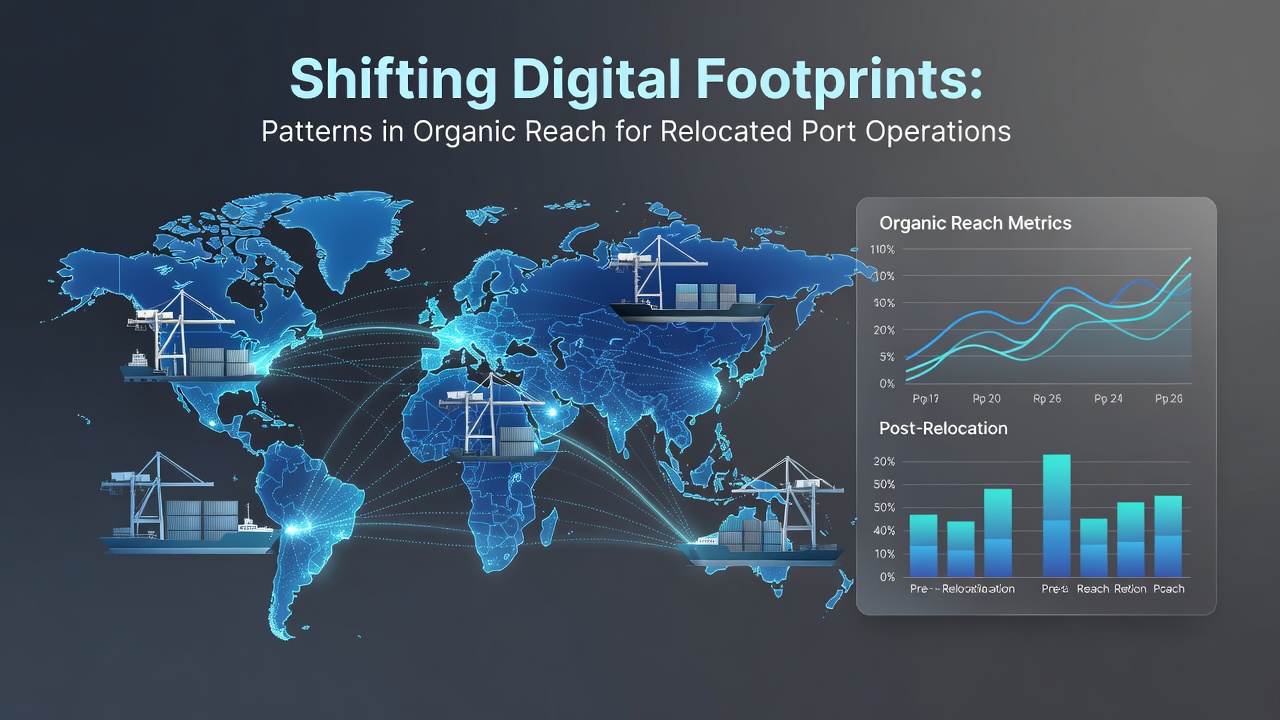
Researchers tracking port digital transitions note that organic reach declines initially when operations move because historical URLs lose authority while new ones establish themselves in indexes, yet recovery patterns emerge within three to six months when teams implement structured redirects and refreshed content calendars. Data from multiple relocation projects show that crawl budgets allocated to port authority domains increase after moves when new site architectures include more location-specific pages and real-time operational updates, which signals to engines that the property remains active.
One analysis of North American terminals revealed that anchor text distributions shift toward geographic terms such as city names and regional trade routes once operations settle into new sites, and this change correlates with improved rankings for queries tied to the updated location rather than the former one. External links from industry directories and government shipping registries play a role in reestablishing trust, while internal linking structures that connect cargo schedules, berth availability, and environmental compliance sections help distribute authority across the expanded content set.
Observed Patterns Across Recent Cases
Studies of European and Asian terminals that completed moves between 2023 and 2025 indicate that organic traffic for legacy location keywords drops sharply in the first 60 days, then stabilizes as new regional phrases gain traction; meanwhile traffic for service-related terms such as container handling capacity and customs clearance timelines recovers faster when operators publish updated data sheets promptly. Observers note that ports maintaining consistent NAP citations across maritime databases and trade association listings experience quicker reindexing, whereas those that allow citation drift encounter prolonged dips in local pack visibility.
Figures from Transport Canada logistics reports highlight that terminals incorporating structured data for vessel arrivals and departure times see enhanced rich result appearances in search, which in turn lifts click-through rates for operational queries. In parallel, Australian infrastructure assessments document how ports that coordinate migration timelines with major trade partners maintain steadier referral traffic from partner sites, reducing the severity of temporary ranking losses.
Developments Projected for September 2026
Industry monitoring groups anticipate that updated maritime connectivity datasets scheduled for release in September 2026 will provide fresh benchmarks on how relocated facilities perform in organic search relative to static competitors. These datasets are expected to include metrics on domain age effects, link velocity after address changes, and the impact of multilingual content on reach for international shipping queries. Analysts following similar patterns in prior years suggest that ports preparing consolidated sitemaps and hreflang implementations ahead of such releases position themselves to capture incremental visibility gains once the new data enters public indexes.
Conclusion
Patterns in organic reach following port relocations consistently show an initial adjustment phase followed by recovery when technical migrations align with content refreshes and authoritative link development. Data from government agencies and academic reviews continue to underscore the importance of proactive indexing management and citation consistency. Ports that treat digital footprints as dynamic assets tied to physical changes demonstrate clearer trajectories toward restored and expanded search presence over time.