Lars Schwarz · 21 October 2026
Tracing Regulatory Shifts in Auxiliary Coastal Facilities and Their Influence on Niche Trade Corridors
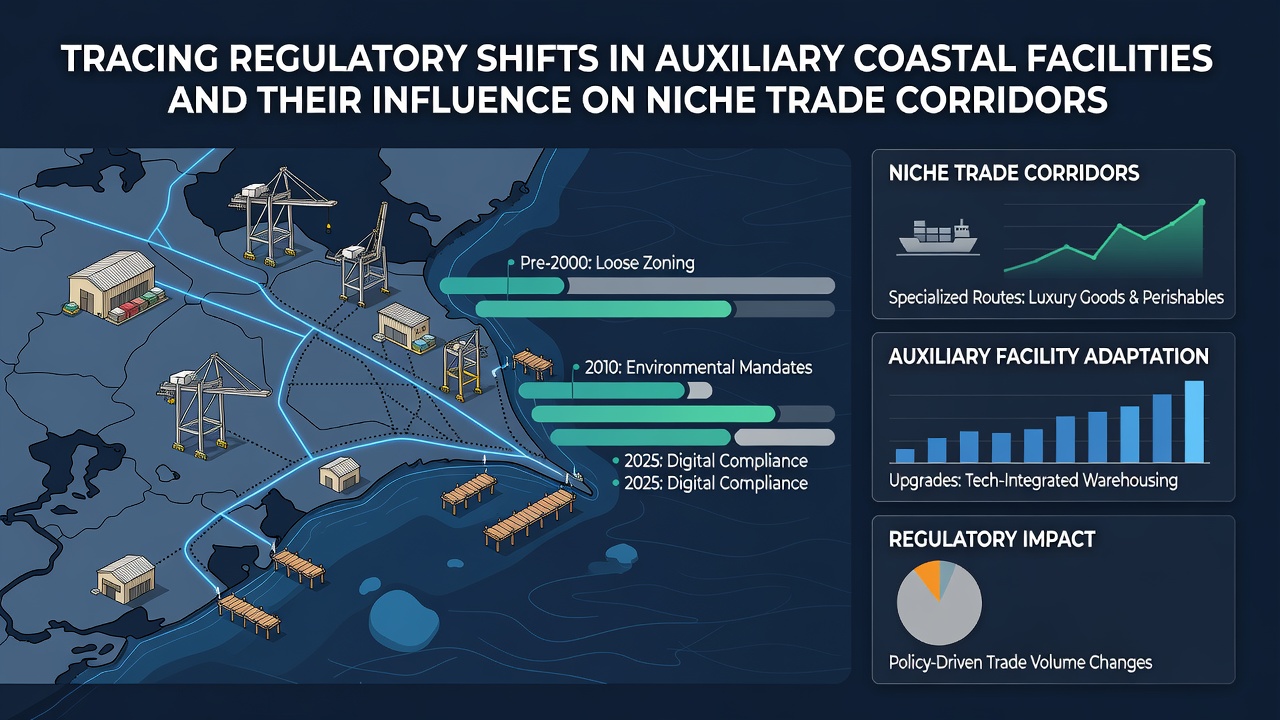
Regulatory changes at auxiliary coastal facilities have reshaped how niche trade corridors operate, and observers note that these adjustments often ripple through specialized shipping routes that connect smaller ports with regional markets. Facilities outside major hubs handle everything from perishable goods to industrial components, yet updates in environmental standards, safety protocols, and customs procedures have altered access patterns since the early 2020s. Data from maritime tracking systems shows increased vessel calls at these sites in regions where streamlined permitting has taken effect, while other areas report reduced throughput after stricter emission rules came online.
Defining Auxiliary Coastal Facilities in Modern Trade Networks
Auxiliary coastal facilities include secondary terminals, feeder ports, and specialized berths that support larger gateway operations without the scale of primary container hubs. Researchers at transport institutes have documented how these sites manage niche cargo flows such as agricultural exports, energy equipment, and regional bulk commodities. Their role becomes clearer when examining traffic data that reveals consistent volumes along corridors linking inland producers to overseas buyers through shorter sea legs. Regulatory frameworks governing these locations vary by jurisdiction, with updates focusing on dredging permits, berth capacity limits, and labor standards that directly affect turnaround times.
Key Regulatory Developments and Implementation Timelines
Policy adjustments rolled out across multiple jurisdictions have targeted emissions controls and digital documentation requirements at these facilities. In North America, revised guidelines from the U.S. Maritime Administration have emphasized compliance with updated ballast water management standards, which took effect progressively through 2025. European operators have aligned with directives from the European Maritime Safety Agency that introduced mandatory reporting systems for auxiliary terminals handling hazardous materials. Observers tracking these shifts point to October 2026 as a milestone when several Canadian port authorities plan to enforce new pilotage certification rules that could influence vessel routing along the St. Lawrence corridor and connected feeder routes.
These changes do not occur in isolation. Studies from academic maritime centers indicate that facilities adopting electronic single-window systems ahead of deadlines have seen measurable reductions in dwell times for niche cargo. Conversely, sites facing delayed infrastructure upgrades report temporary rerouting of vessels toward more compliant alternatives, altering established trade lane volumes in the process.
Impacts on Niche Trade Corridors
Niche trade corridors, often defined by their focus on specific commodity groups or geographic pairings, respond directly to regulatory signals at auxiliary sites. Cargo diversification data compiled by international trade bodies reveals that corridors serving secondary ports in the Asia-Pacific region have expanded where local authorities relaxed certain cabotage restrictions, allowing more flexible feeder services. In contrast, corridors tied to facilities under heightened environmental scrutiny have experienced consolidation, with operators concentrating calls at fewer, better-equipped terminals.
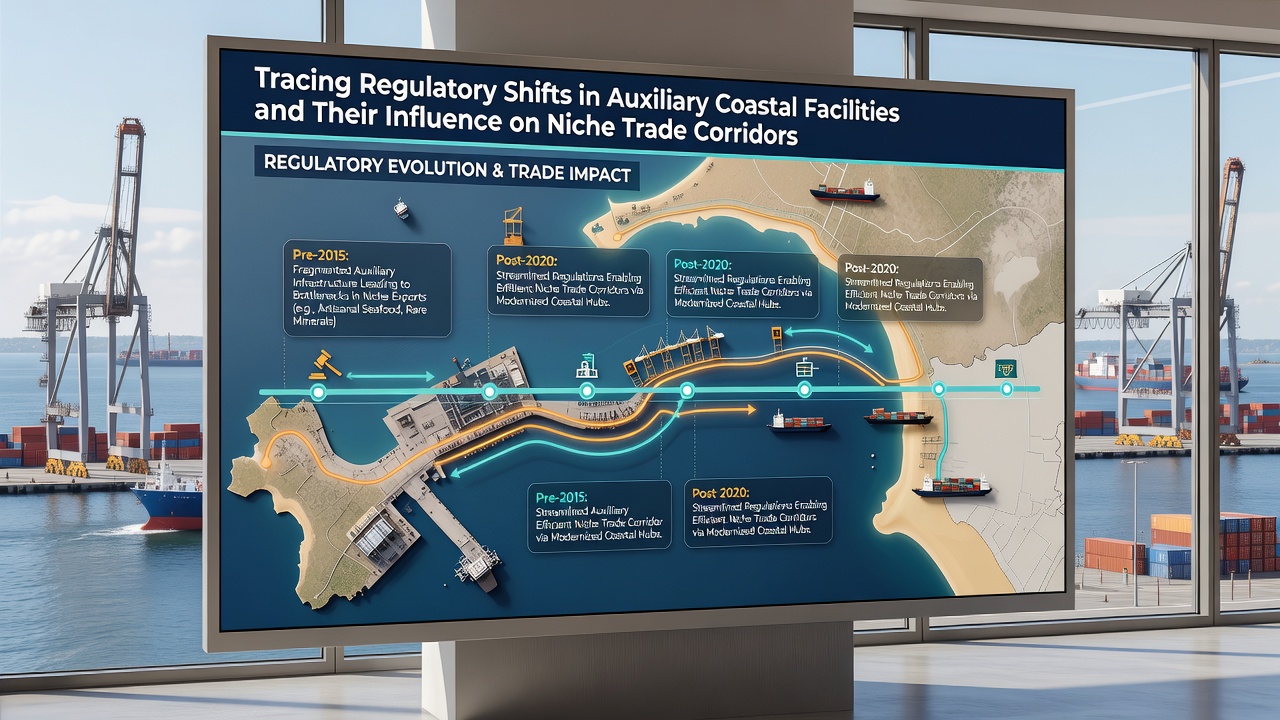
One analysis of vessel traffic patterns released by Transport Canada highlighted how regulatory harmonization between auxiliary facilities along the Atlantic coast and their Caribbean counterparts supported steadier flows of reefer containers carrying seasonal produce. The same report noted that corridors lacking synchronized safety inspection protocols experienced more frequent delays, prompting shippers to adjust schedules months in advance. Similar patterns appear in Australian data, where updates from the Australian Maritime Safety Authority regarding auxiliary berth certifications have influenced routing decisions for mineral export lanes serving smaller coastal outlets.
Regional Variations and Corridor Adaptations
Differences emerge when comparing regulatory approaches across continents. Facilities in the Baltic region, guided by national maritime administrations, have integrated noise and vibration standards that affect scheduling for overnight operations, leading some niche carriers to favor daylight transits along established short-sea routes. In Latin American secondary ports, customs modernization programs tied to regional trade agreements have accelerated clearance processes, supporting growth along corridors that previously relied on transshipment through larger gateways.
Those monitoring these developments note that corridor operators frequently adjust vessel sizes and call frequencies in response to regulatory thresholds rather than market demand alone. Figures released by the International Transport Forum show measurable shifts in average payload sizes on routes connecting auxiliary sites after new weight and stability rules were introduced in 2024. Such adaptations demonstrate how policy at the facility level translates into structural changes along entire trade lanes.
Conclusion
Regulatory shifts at auxiliary coastal facilities continue to influence niche trade corridors through direct effects on operations and indirect effects on routing decisions. Evidence from government agencies and research institutions across multiple regions documents these connections without suggesting uniform outcomes. Continued monitoring of implementation timelines, including milestones scheduled for October 2026, provides further data points for understanding how these evolving frameworks shape specialized maritime networks.